

This week's edition
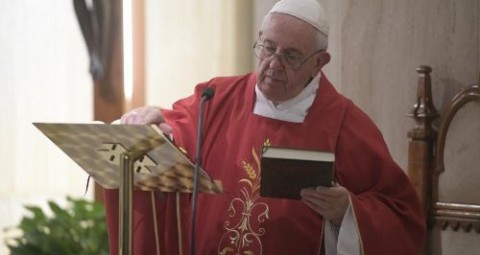
Pope Francis decries building of ‘ecclesiastical careers’ in Church
January 24th, 2020 |  0 COMMENTS
In a recent homily, Pope Francis warned laity and clergy that ‘you can’t buy the Lord’s gifts’
Pope Francis reminded the Faithful that it is not Christian to seek favours in order to grow ecclesiastical careers. Celebrating Mass at the Casa Santa Marta on Tuesday January 21, the Holy Father said that being a Christian, a priest of a bishop is a free gift from the Lord and that holiness consists in ‘guarding’ the gift that we receive gratuitously, not due to our own merits. Pope Francis was reflecting on the Responsorial Psalm and from the First Reading of the day’s liturgy. King David He said that the Psalm recalls the election of David as king of Israel, after the Lord rejected Saul for not obeying Him. Highlighting how Christians are anointed with oil when Baptised, Pope Francis said that God urges Samuel to look beyond appearances as ‘it does not matter what man sees: in fact, man sees the appearance but the Lord sees the heart.’ He recalled how David’s brothers fought the... continue reading.







 RSS Feeds